- writing date 2026.07.30
- author Communication Team
- hits 2
Professor Shin Chang-ho of the Department of Education
Shameful Reflections on Interaction with AI
There was a request: “Please write your thoughts on the direction of future education in free prose.” In the midst of my flurried attempts to find order out of chaos, I had been asked to sing an ode to education, and even to the future direction of education. I felt a frisson of fear and excitement.
A passage from the Analects of Confucius came to mind: “Mijisaeng Eonjisa.” It literally translates to “How can we know death when we do not even know life?”, which can be interpreted as “How can we understand death, looming in the future, when we cannot even properly understand life as we live it here and now? Isn’t it more important to prioritize fulfilling our duties as human beings and living life in its most proper form here in the present?”
The Zeitgeist Cutting Across the Wilderness: The Great Wave of AI
Predicting the education of the future? “No!” I thought. Let us face reality first. With that yearning in mind, I looked around me. Suddenly, I saw a vast wilderness overlapping the dazzling city lights beyond my gaze. That endlessly sprawling world and the massive wave swallowing that wilderness whole were none other than artificial intelligence (AI), this era’s dominant force. You and I and everyone around us are all racing through that wilderness.
Just like Yi Yuk-sa’s allusions to the The Wilderness in his famous song, AI weaves around the world in all directions. Is the door opening to a world of different meaning? Is this finally the time? Is there a overman approaching upon a snow-white steed? Is AI that overman? I cannot organize my thoughts at all. As if clearing my blurry vision, the word zeitgeist struck me. Zeitgeist! It feels like it holds some profound meaning, but at the same time, it’s an e-x-p-r-e-s-s-i-o-n that is used in every era. What is it? The here and now? The spirit of what?
Over the long course of time, each era has refined its own distinct lifestyles and spirit. This was the case with the Neolithic Agricultural Revolution and with the Industrial Revolution centered on mechanical industry revolution. Since then, the progress of computer-based advanced technological civilization has led a revolution in human affairs. The wave of AI-led transformation is on an unprecedented path, rendering obsolete such notions as big data, biotechnology, and smart technology. Eras are like that, in a flow accelerated by space and time.
Beyond Tools to Resonance
AI-led transformation is not merely reform. Rather, it is comprehensive innovation. Indeed, a revolution is taking place across life. However, education seems rather insensitive to this innovation. Of course, learning methods and theories related to technology have significantly progressed. There have been epochal changes in educational methods over the past 20 years. Nevertheless, with regard to the essence, purpose, goals, and content of education, there is no clear progress, even compared to decades ago. People seem to be merely turning the hamster wheel of life, going to school, taking exams, advancing to higher education, and getting a job. I think that this is because although people pretend to care about change, they actually do not consider sincere interactions.
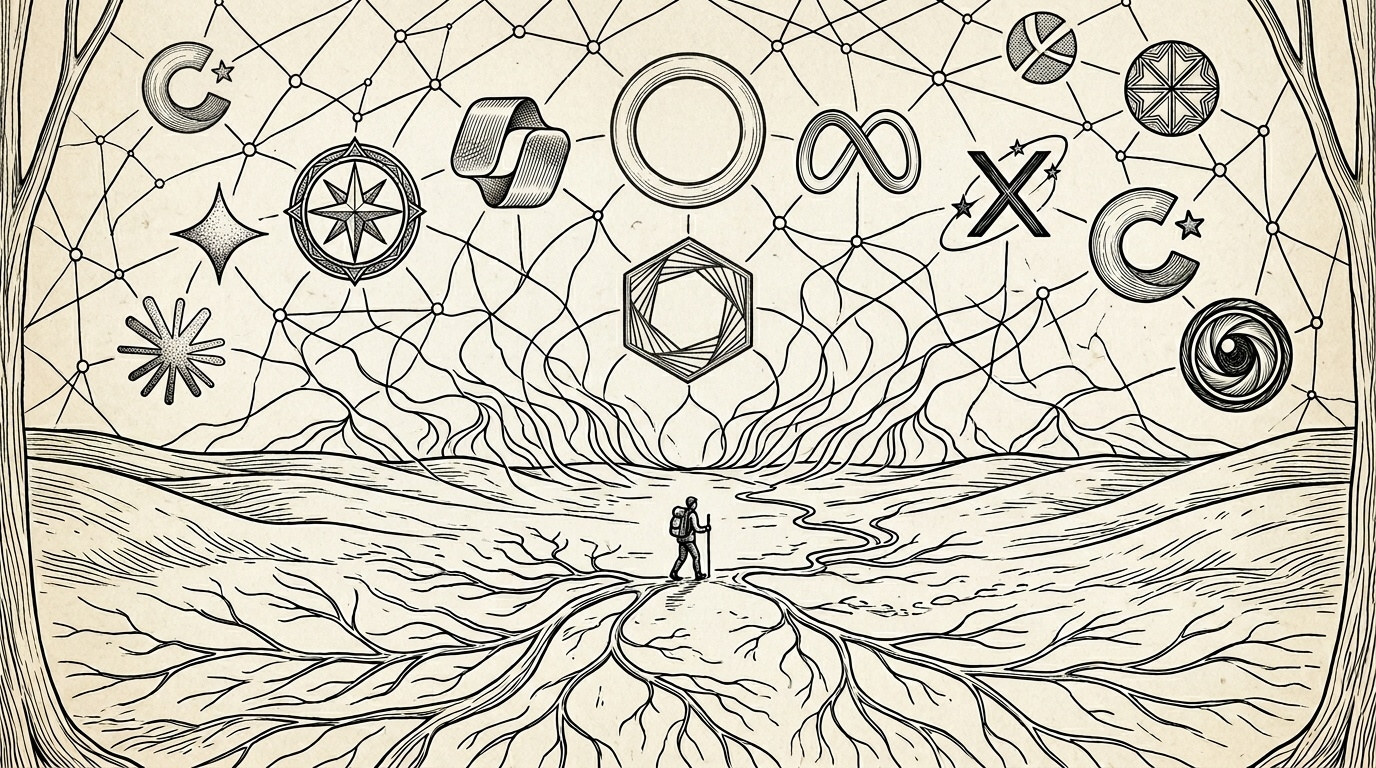
Even if that’s not the case, let’s assume it is. As a human, how am I interacting with AI? In search for an answer, I asked an AI about the relationship between human beings and AI, and I received an answer roughly as follows.
The relationship between human beings and AI is currently evolving rapidly. Beyond a mere tool-user relationship, it has now evolved into a complex and multi-layered relationship encompassing cooperation, coexistence and even emotional bonds. The aspects of the relationship between the two can be discussed from various perspectives. When considering AI as a cooperator and assistive tool, it is an efficient, productivity-maximizing, capability-expanding, and interactive relationship. When viewing AI as a partner with whom we coexist and live together, AI accountability and the unique domains of humans become clear, essential human values are reflected upon, and solidarity and cooperation among humanity become important. When the relationship between the two is regarded as an emotional and social one, they form a deep and long-term bond, feeling an emotional connection similar to that between friends, partners, or even spouses.
A flush of shame overwhelmed me. Why was that? While even AI views its relationship with human beings in that way, wasn’t I obsessed with using it as a tool or means? I fell deep into thought as I read these aspects of relationships described by AI. As Yi Yuk-sa cried out in The Wilderness, should I sow the seeds of my poor song? What kind of attitude toward life is required to rebuild a society where the scent of plum blossoms lingers?
The logic of cheoningameung is deeply embedded in the foundation of traditional Eastern education. This philosophy explores the relationship between the nature and human beings within the universe. With that in mind, I have pondered the relationship between human beings and AI within human society. AI is not human. It is a mechanical system. However, it implements human intellectual abilities such as learning, reasoning, and perception. It performs various tasks, including analyzing data, recognizing patterns, solving problems, and making decisions. In this sense, human beings and AI are dongryusangeung: things of a kind respond to one another. Human beings have become connected to AI. This means that we have gone beyond the level of using AI as a simple tool or means for human convenience.
A Modern Variation of Cheoningameung: An Educational Attitude Toward Welcoming AI as a Friend
Future education should reflect on this point and use it as a stepping stone to move forward. It should not remain merely at the convergence of mechanisms in which modern thoughts are gathered. Instead, it must spread the organism of ecological consciousness that cares for existence. In other words, it should foster organic interaction. A society in which we mechanically face things without any respect for existence or consideration is not the world intended to create in the wilderness. The wilderness is a place of exchange where all beings intertwine and interact with one another. At the center of this, AI is realistically situated.
Fancy phrases trying to represent the zeitgeist, such as externalization of brain labor, Internet hyper-connected civilization, and diverse capital, accelerate the AI revolution. At the forefront of this change, what should education consider? In general, two perspectives come to mind: Should the sustainability of existing education be a prerequisite? Or should the inevitability of its dissolution be presupposed? Either way, education will simply progress. However, it is not easy to either abandon or select each of them.
At this point, I reconsidered the reason for the existence of education. What about a life business that nurtures four types of abilities across the two dimensions? I can make this attempt to design the principles of education based on deep contemplation of a human society from an all-encompassing perspective, where I interact with AI in various aspects while embracing it as a part of myself.
- First Perspective: Recognize the World and Existence!
From this perspective, it is necessary to foster two types of abilities. One is the ability to grasp the situation people face. This forms knowledge. The other is the ability to dominate the state of affairs people encounter. It endows human beings with the stance and attitude to interact with the world. - Second Perspective: Live the World and Life!
Here, too, it is necessary to cultivate two types of abilities. One is the ability to adapt to reality. This becomes the capacity to handle the various life issues people face. The other is the ability to play a leading role in moving forward into the future. This ability helps people acquire the power to make life issues they encounter into new ones.
These four types of abilities and competences from the two perspectives essentially request the participation of AI. It is by no means a matter of utilizing AI as a tool or a means. It rather implies that we must welcome AI as a friend, with a sense of unity with ourselves.
I await AI, and AI awaits me!
Amidst the feast of waiting, the scent of our interaction will grow even richer.
After majoring in philosophy in the Department of Education at Korea University, Professor Shin Chang-ho studied philosophy and religion at the Academy of Korean Studies, and received a doctoral degree from the Graduate School of Korea University with a dissertation titled “The Educational Theory of the Doctrine of the Mean.” He has contributed to educational administration and academic development by serving as the Director of Admissions, Director of the Institute for General Education, Director of the Research Institute of Education, and Director of the Institute for Continuing Education at Korea University.
He also served as an executive of major academic societies, including President of the Korean Philosophy of Education Society and the Society of Korean-Chinese Philosophy, Editor-in-Chief of the Korean Society for History of Education, and Chairman of the Education Division of the Yulgok Society, and received the 2021 Yulgok Academic Award for his contribution. Through the publication of approximately 100 authored and translated books, including Self-Cultivation: The Essence of Confucian Educational Philosophy, and 150 journal papers, he has expanded the horizons of oriental studies and the philosophy of educational history. He is currently devoting himself to the modern interpretation of classical literature and the development of a lifelong learning model for adults.