- writing date 2026.07.30
- author Communication Team
- hits 2
Seeking the Future of Energy in Singapore
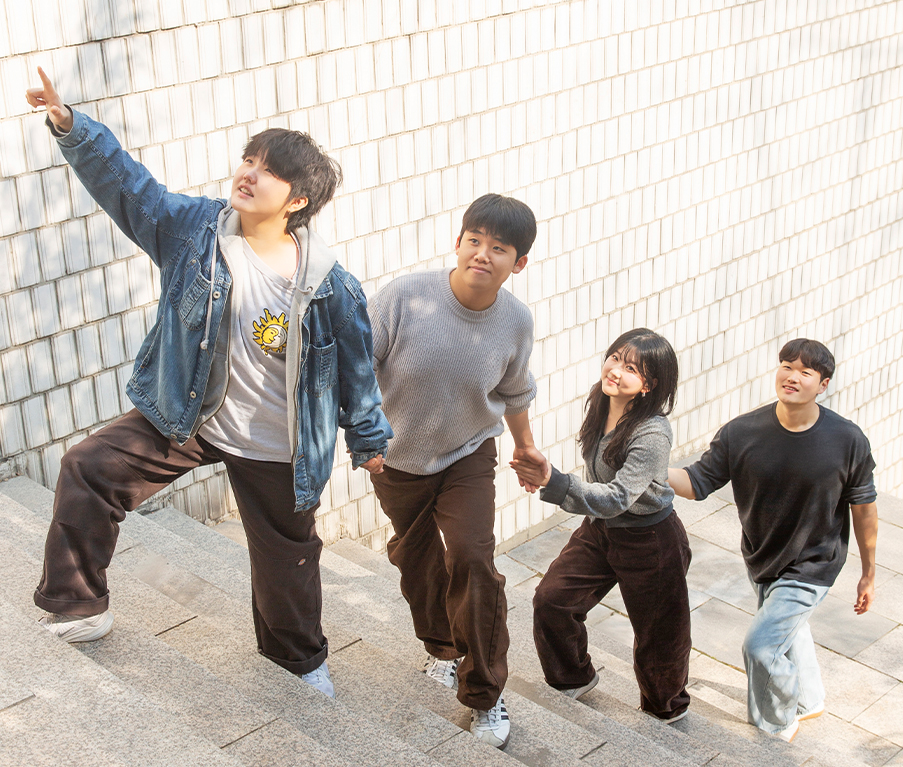
The Student Field Training Program “Let’s Go KU” — under the theme of “Energy Up! Let’s Go Global & Competent” — organized by the Energy New Industry Innovation Convergence College Project Group, has firmly established itself as the university's premier global study tour. Last summer, students witnessed the harmony between traditional industry and renewable energy in Germany and Switzerland, Europe's energy leaders. This past January, they examined the current landscape of the domestic power infrastructure in Jeju. Extending this journey of exploration, they headed to Singapore, a meticulously designed city-state and Asia's central energy hub, this February.
An Unstoppable Journey of Exploration: The Third Leap of 'Let's Go KU'
'Let's Go KU' is a global competency enhancement program that aims to deepen students' understanding of their majors and industries by bridging theory and practice while boosting their familiarity with the real-world businesses. For this Singapore trip cohort, 18 students from interdisciplinary majors in the New Energy Industry who demonstrated outstanding academic performance in such courses as Energy and Climate Change, Introduction to Renewable Energy, and Convergence of Electrochemical Energy Storage, explored world-class research institutions including the National University of Singapore (NUS) and Nanyang Technological University (NTU), alongside renewable energy industrial sites, from February 8 to 13. Notably, this program went beyond engineering fields, actively selecting students from the humanities, social sciences, and business to bring the core mission of 'innovative convergence' to life.
Field Story
Discovering the Value of Convergence in Singapore
Singapore shares many similarities with South Korea. It is a nation that has overcome its structural limitations of a small territory and scarce resources through powerful government policies and technological prowess. Here, students explored the future of energy through the unique lens of their respective majors.
Witnessing the Pinnacle of New Energy Industries
Junior, Department of Chemistry/New Energy Industry Interdisciplinary Major
As an aspiring professional currently in an internship in technical sales, Lee Han-seo found this journey to be a process of translating textbook knowledge into real-world industry. “I chose this interdisciplinary major to quench my thirst for environmental studies, which my primary major in chemistry couldn't fully cover. I was captivated by an integrated curriculum that spans everything from renewable energy production to transport, storage, and management. This trip to Singapore was the perfect opportunity to experience firsthand how smart energy systems can overcome structural resource constraints. The water management policy I observed at the Marina Barrage was particularly memorable. Seeing 'NEWater'—the wastewater reclamation technology—in production made me deeply realize how academic knowledge can contribute to both national purpose (national interests) and create creating economic value. ”
Ecological Inspiration Captured in Urban Green Spaces
Senior, Division of Environmental Science and Ecological Engineering/New Energy Industry Interdisciplinary Major
Yoon I-sol, who has prior internship experience in an environmental big data lab, applied for this program to learn how Singapore tackles energy constraints similar to Korea's. As an avid birdwatcher, she possessed a unique perspective for reading the organic flows within a city beyond the technologies that run them. “This field trip confirmed the scalability of technology and the power of systems. It was a fresh shock to see how spatial data analysis tools, which I have been studying, were being applied via machine learning to predict electrolyte performance in an entirely different field. Additionally, studying the precise blueprints at the City Gallery taught me Singapore's strategy of optimizing an entire nation into a massive unified system. Finally, I experienced firsthand the impact of urban green spaces on preserving biodiversity. Spotting an Oriental Pied Hornbill, which is a restored endangered species, during an early morning birdwatching session was precious proof that green patches amidst gray asphalt serve as vital ecological corridors. Singapore's urban design offers profound implications for our own domestic energy policies.”
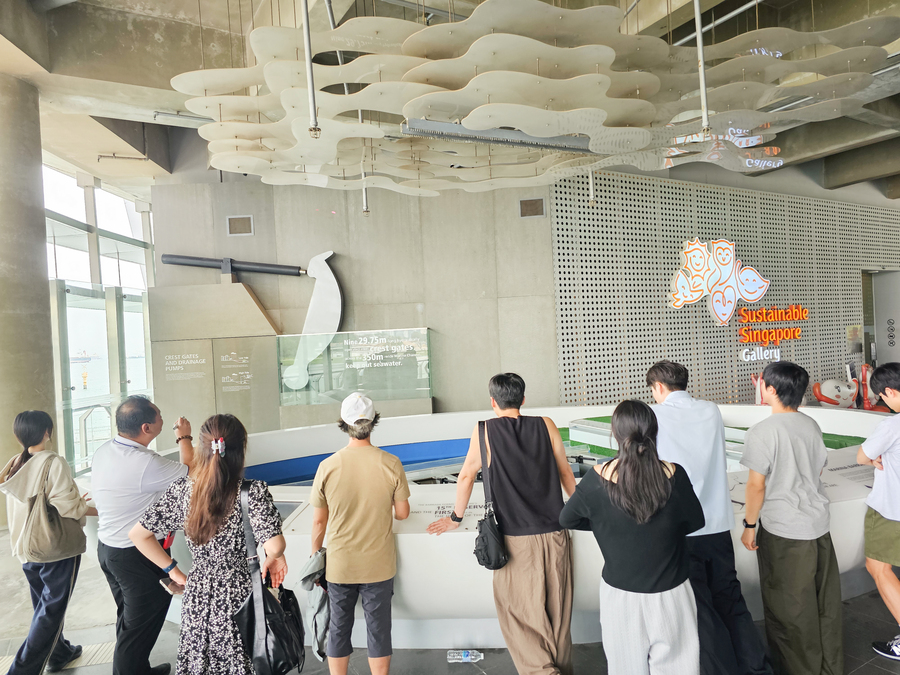
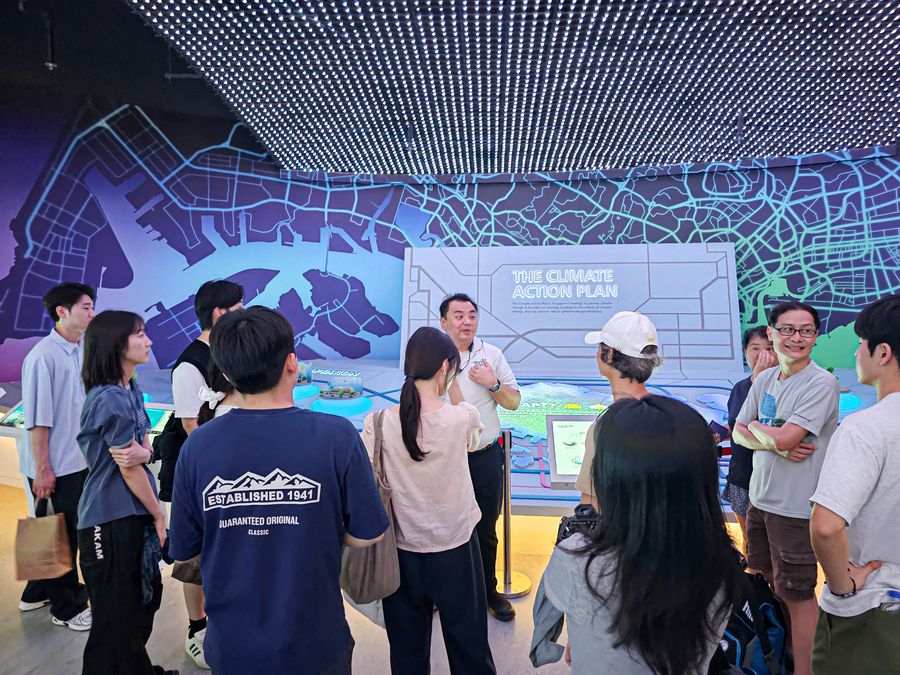
▲ (Top) A docent explains a model of Marina Bay's water resource management system.
(Bottom) An explanation of the URA Master Plan that aims to develop the entire city into a future low-carbon and eco-friendly zone.
The Power of Systems Through the Eyes of a Business Major
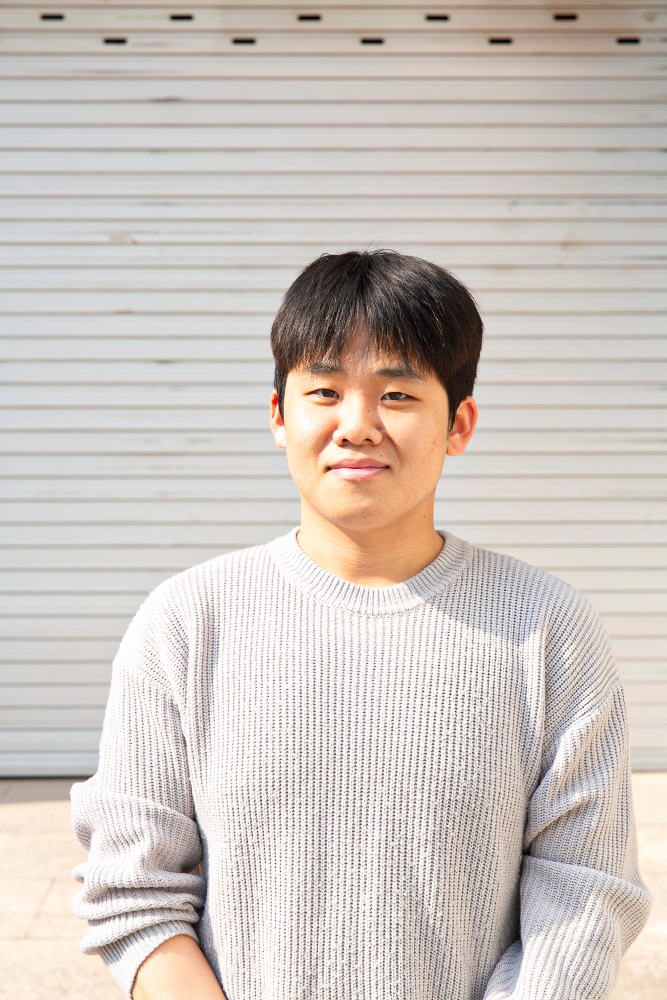
Junior, Department of Business Administration
Selected from the business track, Jeong Dong-jin focused on the establishment of national-scale ESG systems that transcend individual corporate environmental, social, and governance (ESG) initiatives. Through this tour, he captured the intersection where humanistic insights meet technical understanding. I did not have high expectations when I joined the program. , But listening to anecdotes from industry experts at NTU gave me the confidence that, even without an engineering background, converging my major with the energy sector would allow me to develop a truly unique competitive edge.”
The First Step Toward Infusing Technology with Social Value
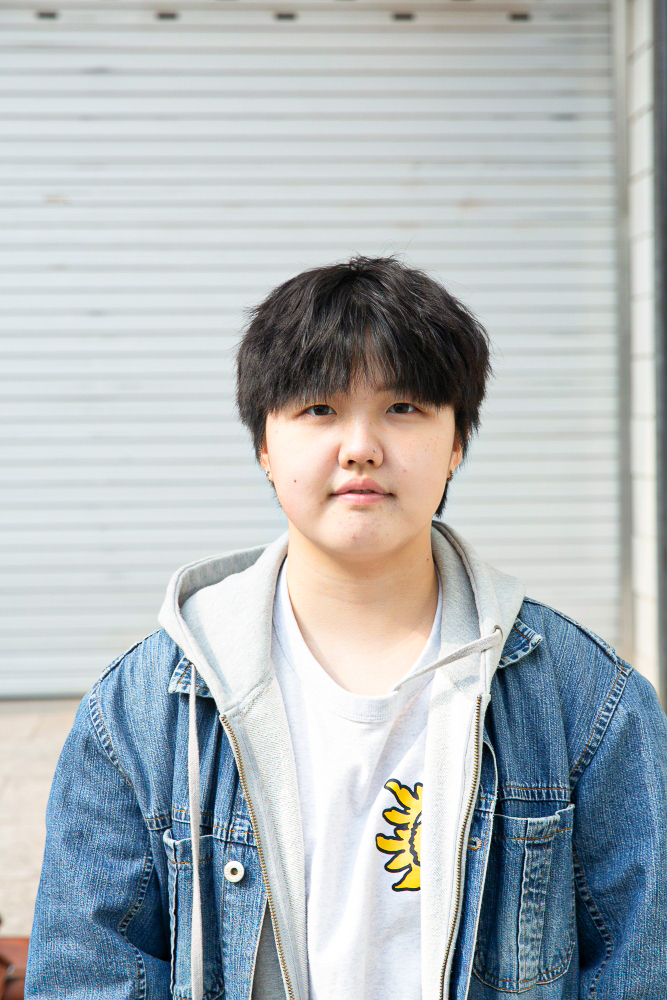
Junior, Department of Sociology/New Energy Industry Interdisciplinary Major
Keenly interested in solving social issues and experienced in NGO activities, Choi Hae-jin overcame the limitations he previously felt due to a lack of technical understanding. Fascination with the fact that energy serves as the foundation for all social activities inspired him to harbor a concrete dream of becoming an international energy expert. “I had many worries about my career path, but communicating with industry researchers at NTU helped me discover my own distinct strengths. I realized that my interdisciplinary thinking to grasp the broader social context rather than just specific technologies is a tremendous asset. In particular, observing “community acceptance strategies” and “citizen-participatory data collection” models at the intersection of energy and sociology taught me how the execution power of civil society and enterprises can merge to expand social value. My vague dream became clear: to become an energy expert who realizes the social value of technology on a global stage.”
Reading the Future from the Strict Research Ethics
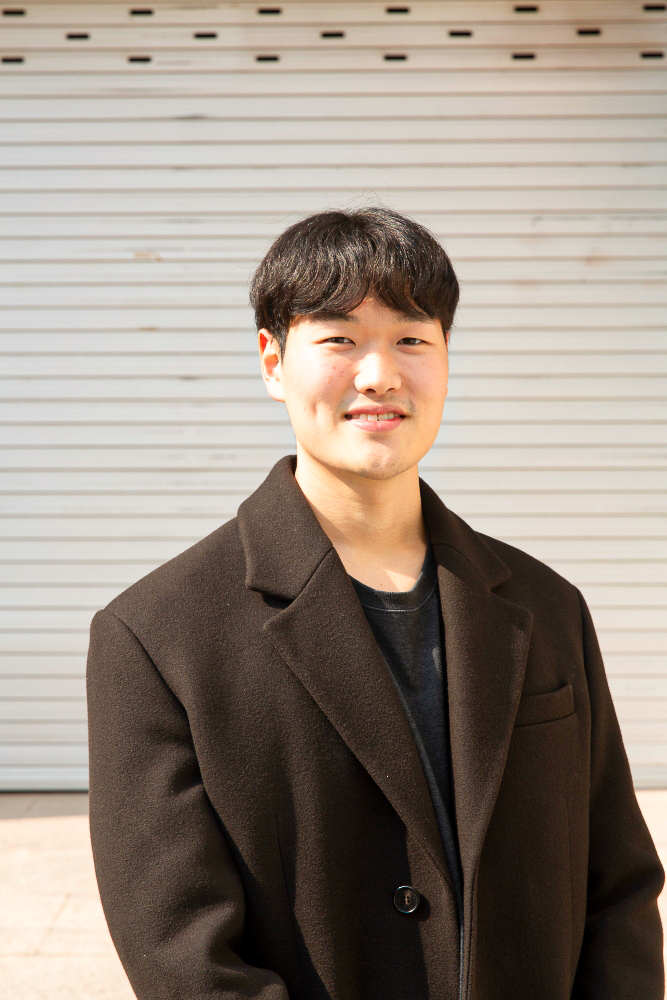
Junior, Department of Earth and Environmental Sciences
Having participated in both the previous European tour cohosts (Germany and Switzerland), Kang Hee-hoon solidified his decision to pursue graduate studies. For someone dreaming of working in hydrogen energy utilization, Singapore's research environment provided immense inspiration. 'While contemplating graduate school, visiting Professor Park Somin's lab at NUS was a major turning point. Her career path of completing her master's in Korea and studying abroad to establish herself as a global researcher became my personal role model. Seeing researchers strictly adhering to the basics by always wearing lab coats and safety goggles gave me a glimpse of a genuine research atmosphere. I could learn the attitude toward research beyond just the excellence of equipment. I resolved to study abroad and experience a broader world as soon as conditions allow.'
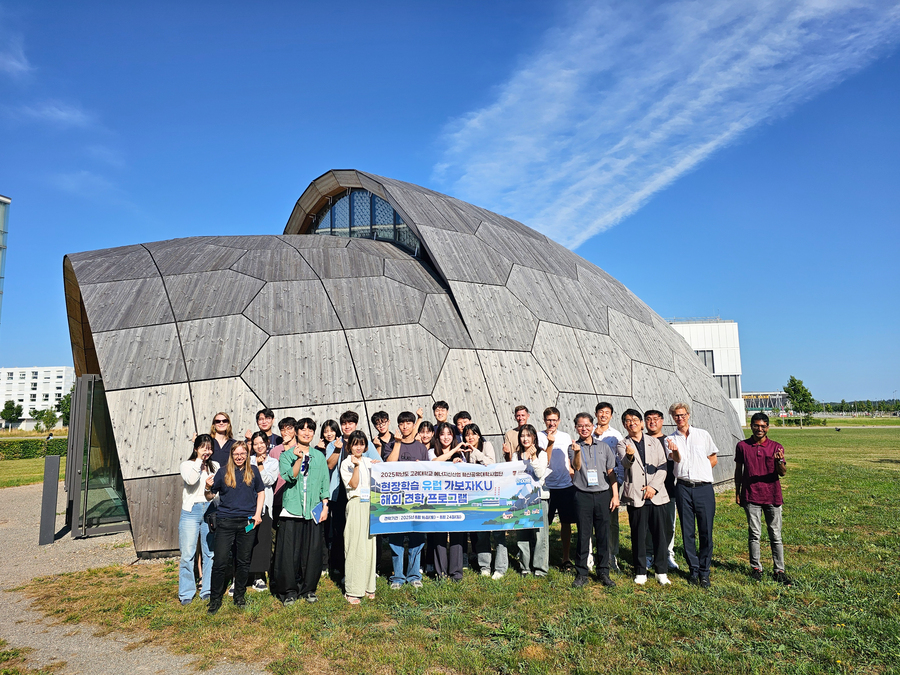
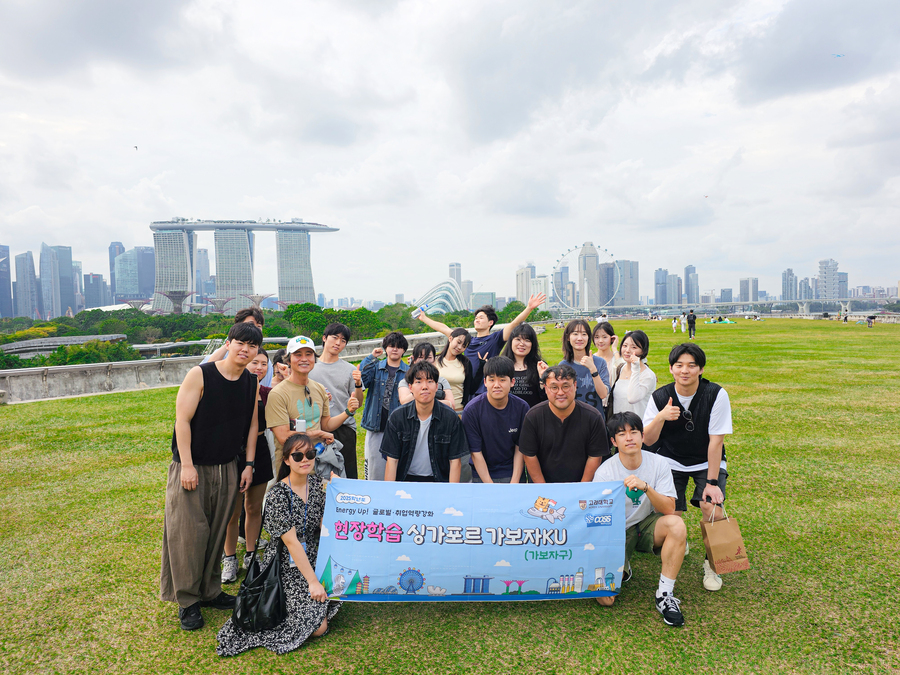
▲ (Left) Visiting the College of Engineering at the University of Freiburg; (Right) Enjoying the Marina Bay Sands (MBS) SkyPark Observation Deck following the Marina Barrage tour.
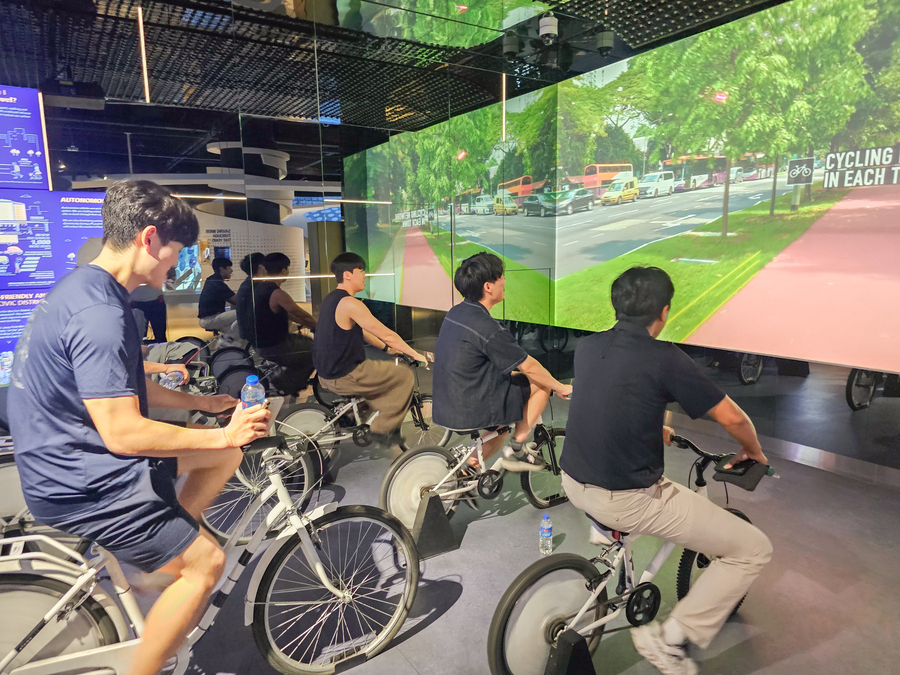
▲ Experiencing energy production via bicycles at the zero-energy building CDL Green Gallery*
*An exhibition space jointly established by the Singapore-based global real estate developer CDL and the National Parks Board of Singapore
The True Benefits of 'Let's Go KU'
The participating students rated this experience as a multidimensional learning experience that could never be replicated in a traditional classroom setting. In particular, intensive interactions with peers from other majors served as the foundation for shaping new perspectives. Kang recalled, “Even during transits and breaks, we constantly discussed energy issues. This rapidly brought teammates closer together, and that solidarity translated into fantastic teamwork in subsequent projects.” The trip also provided vital clarity for students standing at a career crossroads. Lee and Choi expressed their aspirations for global careers, saying “Witnessing Singapore's cutting-edge infrastructure and the vibrant operations of global corporations inspired an ambition to one day thrive as global energy experts.”
Above all, students cited specialized access as the program's core value, which wouldn’t be accessible without the program. Yoon emphasized, “I have visited Singapore several times, but I had never looked deep into the heart of its energy infrastructure like this. Engaging in Q&A sessions deep inside university labs and examining the reclamation pipe infrastructure of special economic zones with a professional docent was an experience exclusive to the Let's Go KU Program.” Jeong also encouraged other students to try the program, saying, 'This is the ultimate opportunity to gain a profound understanding of other disciplines, so do not hesitate to apply.”
The Energy New Industry Innovation Convergence College Project Group plans to continue providing unsparing support so that students can grow beyond borders and disciplinary boundaries. This Singapore field training was an extension of learning beyond the classroom and a decisive turning point that reset each participant's life trajectory. Mirroring the students' shared realization that “energy is the foundation of all social activities,” the university eagerly anticipates the future where these individuals emerge as key leaders guiding the next-generation energy sector.
Interview with students participating in the ‘Let's Go KU’ Training Program
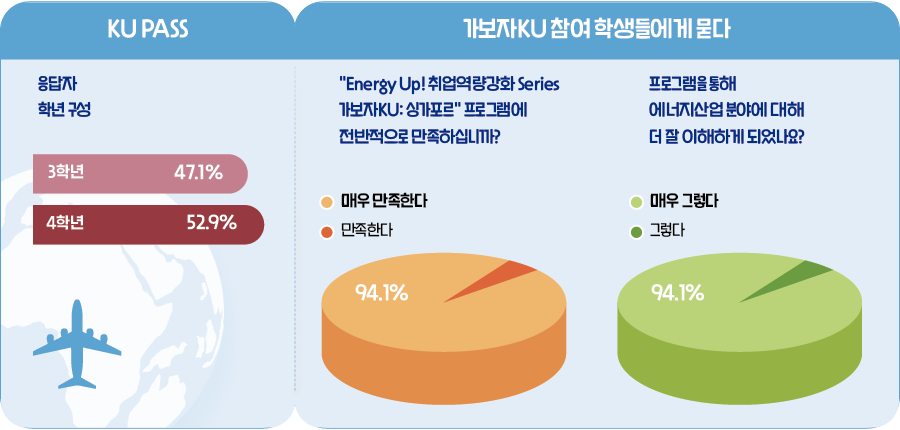

The “Energy Up! Let’s Go Global & Competent! Let’s Go KU” Field Training Program was funded by the Ministry of Education and the National Research Foundation of Korea under the High-Tech Fields Innovation Convergence College Project.