- writing date 2026.07.30
- author Communication Team
- hits 3
Professor Kim Soon-nam
(Department of History, Entering Class of 1986)
in Today’s Language
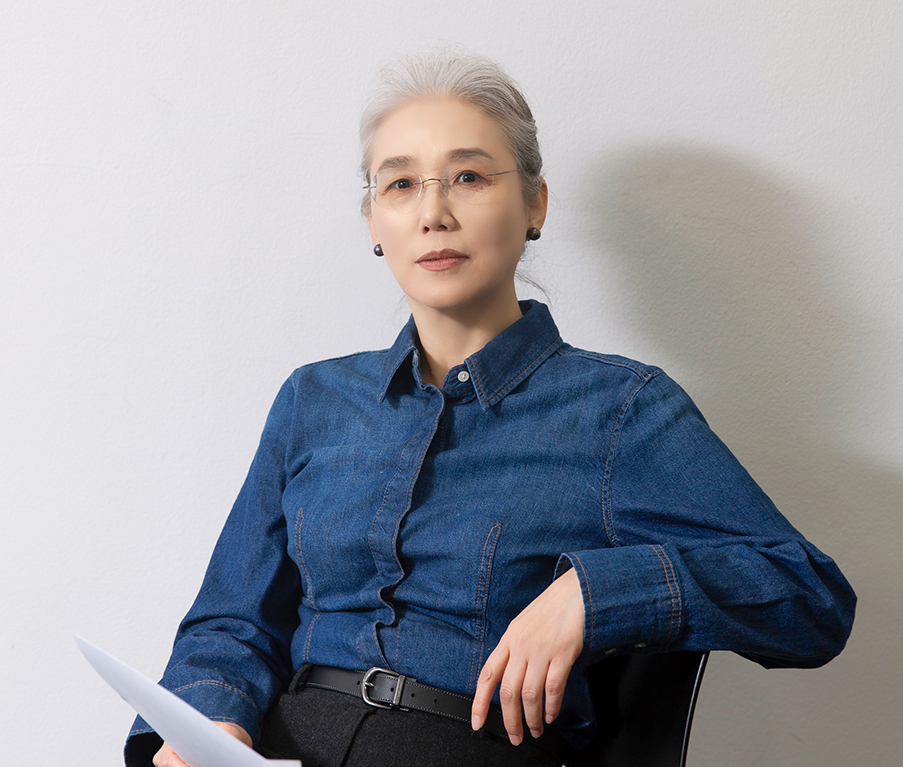
Forty years at Korea University. Since entering the university in 1986 and completing both her undergraduate and graduate studies there, Professor Kim Soon-nam’s life has become intertwined with Korea University’s own history. Now teaching in the Division of Cultural Heritage Convergence at the Sejong Campus, she is a longtime scholar of the political history of early Joseon and the Annals of the Joseon Dynasty. More recently, she has broadened the connection between popular culture and historical scholarship by serving as a historical consultant for the film The Man Who Lives with the King. Yet her academic career alone does not fully capture who she is. As a university student, she was known for being unpredictable, and today she is an avid fan of singer Young Tak, traveling across the country to attend his concerts. We met Professor Kim at the West Building of the College of Liberal Arts.
Struggling to adjust, finding her way in Classical Chinese
Professor Kim Soon-nam’s earliest memories of university are tinged with gray. When she entered Korea University in 1986, South Korea was nearing the end of military dictatorship, and the university stood at the center of the turmoil. To a young woman barely twenty, the campus seemed less a place of learning than the front line of a harsh and repressive era.
“The times were extremely harsh when I entered university in 1986. The university was ordered to close almost as soon as I enrolled. Because of the protests the previous day, tear gas residue still hung heavily in the air, and I would come onto campus with tears in my eyes. I’m not sure whether it was because of the atmosphere or because I simply struggled to adjust. At the time, many students, not just me, were searching for a refuge.”
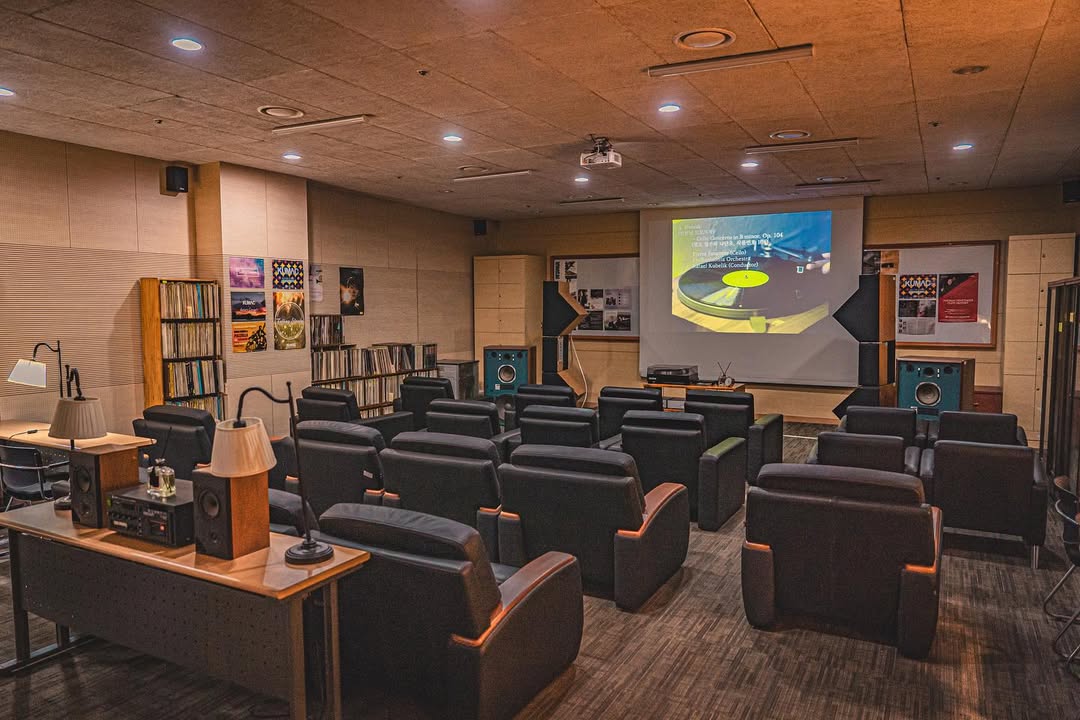
At the time, her only refuge was the Korea University Music Appreciation Center in the old General Education Building. Sitting in a comfortable chair in the darkened listening room, she would catch her breath as she listened to classical music. What truly helped her regain her footing, however, was the straightforward path of study. Toward the end of her first year, she began reading the Analects and Mencius closely with classmates who were struggling with similar concerns.
“Together with a friend from Gwangju and classmates from across the country, we banded together and said, ‘We are history majors, so we should at least learn Classical Chinese properly.’ We met twice a week to read passages and discuss what they meant. I found it fascinating that people could interpret the very same passage so differently. The question, ‘Why do they see it that way?’ kept me engaged. Studying with those friends became both my anchor and my source of strength.”
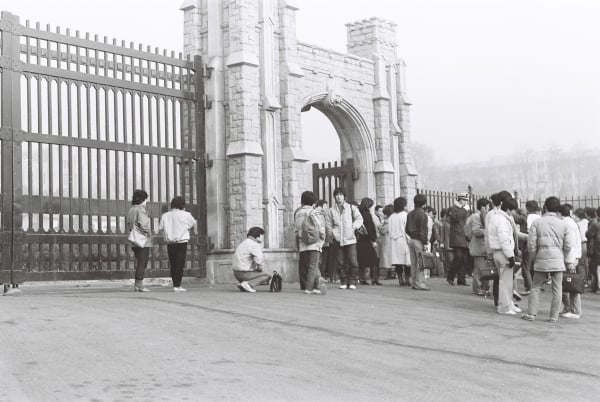
(Top) Korea University’s main gate with access restricted, November 1986
(Bottom) The Korea University Music Appreciation Center as it appears today
A world of research opened by the Annals of the Joseon Dynasty
As she began to enjoy studying Classical Chinese, the facsimile edition of the Annals of the Joseon Dynasty that her father had given her when she entered university finally caught her attention after sitting untouched on her bookshelf for more than a year. Her father, who had studied Western history, hoped that one of his children would pursue Korean history. Once the barrier of Classical Chinese fell away, the vast sea of records contained in the Annals opened before her.
“When I took the books out again, I thought, ‘I think I can actually read this.’ It was just like reaching the point in studying English when books in the original language begin to make sense. I never had any grand ambition of becoming a professor. I simply wanted to learn more. I enjoyed discussing the texts with my friends and seeing how differently we interpreted them. I entered the world of research so naturally that I never seriously considered any other path.”
Professor Kim was drawn to Joseon history by its sophistication. She challenges the tendency to dismiss Joseon as a backward state by drawing on the records of the Annals. The Joseon she found in those records was a country with a “beautiful sense of completeness,” where kings and officials engaged in vigorous debate and laid the foundations of the state through systems of governance.
“As a researcher, there are moments when, while writing a paper, you come across the exact record that supports your argument. It feels like pure bliss. It is a kind of joy that only researchers can truly understand. There is something incredibly satisfying about watching the pieces of a puzzle click into place. The thrill of seeing a single line in a historical source confirm a hypothesis you have formulated is what makes the work impossible to give up. It is completely addictive.”
Eager to share that same joy with her students, she strives to present history not as a relic of the past, but in the language of today. Her courses, with curiosity-provoking titles such as “Rivals in Korean History” and “The World of the Annals of the Joseon Dynasty,” make extensive use of audiovisual materials, including historical dramas, films, and songs, and are highly popular among students.
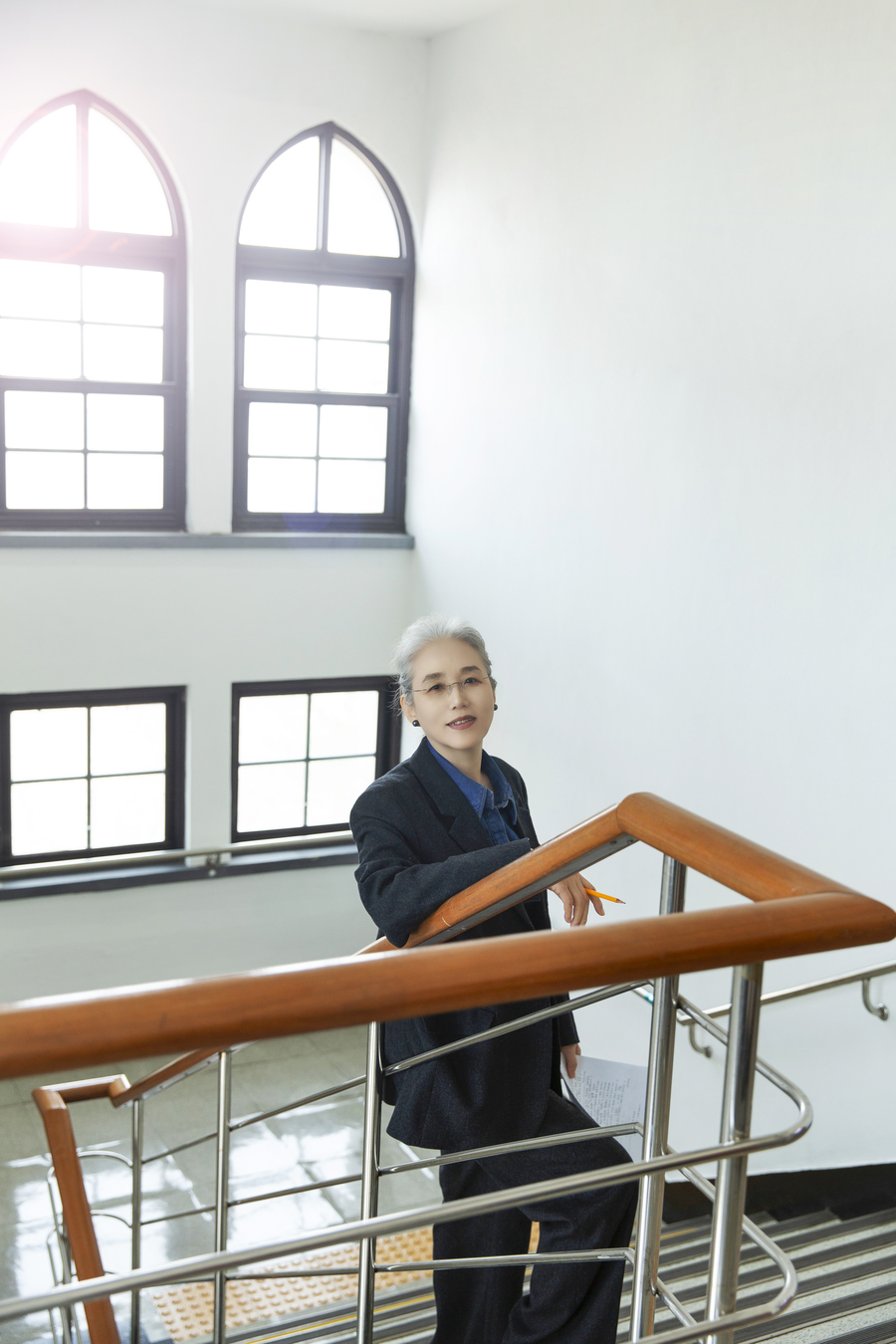
“The moment you discover the exact historical source
that confirms your hypothesis is pure bliss.
The joy of research lies in watching the pieces of the puzzle fall into place.”
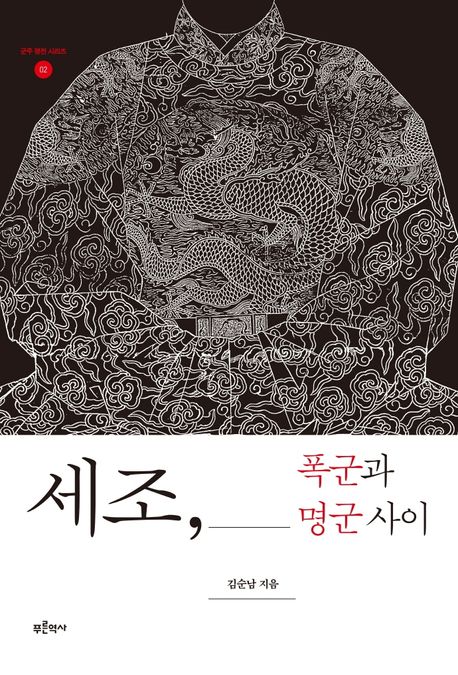
Sejo: Between Tyrant and Wise Ruler | Pureun Yeoksa
The historian behind The Man Who Lives with the King
Her expertise and passion for historical research also came to the fore in her collaboration with popular culture. It was her book King Sejo: Between Tyrant and Wise Ruler (Pureun Yeoksa) that led to her involvement as a historical consultant for the film The Man Who Lives with the King. The production team approached her with highly specific questions, such as, “Were square tables used at the time?”, “What did prisoners wear?”, and “How large was the government office complex in Yeongwol?”
“Historical consulting is essentially unpaid work where you simply answer whatever questions the production team asks. (Laughs) But because everything had to be verified against historical records, I combed through the Annals of Kings Munjong, Danjong, and Sejo. I also went to the filming location in Namyangju to watch the shoot. They were filming multiple takes of a scene in which Eom Heung-do strangles King Danjong. In the historical records, however, Eom Heung-do is the person who recovered Danjong’s body, not the person who killed him. I advised the production team that the scene needed to be handled with greater nuance.”
Behind her incisiveness as a historian is an unexpected side: her seven-year devotion to singer Young-tak. “I started following him by chance during the COVID-19 pandemic. I am someone who cannot be bothered to walk even 300 steps at home, yet I travel around the country to attend his concerts. I may be physically exhausted, but I can feel the dopamine rush. When I look at Young-tak’s musical world, it reminds me a great deal of how we researchers write papers. He studies other people’s songs, much like reviewing prior research; writes his own songs, much like writing a paper; and then has his work evaluated. It makes me realize that creativity and research ultimately intersect.”
Forty years with Korea University: in the end, it was the people who mattered
At home, her family nicknamed her “a herring bone” because of her sensitive, prickly nature, while at university she was a student whose boundless energy was difficult to contain. Behind Professor Kim’s unwavering commitment to the life of a researcher over the past forty years was a mentor who quietly stood by her.
“My advisor always said I was like a rugby ball, never knowing which way I would bounce. I would suddenly go dancing in the middle of studying, or be out having fun again soon after crying. To my professor, I must have seemed restless and unpredictable. I was scolded quite often, too. But my advisor never gave up on this troublesome student and patiently helped shape me. I was taught that researchers should not live in constant haste, but should sit with historical sources, handle them with care, and give them the time they deserve. That guidance made me who I am today.”
Near the end of the interview, Professor Kim identified “people” as the defining theme of her forty years at Korea University: the classmates with whom she shared her youth, the senior students who both corrected and encouraged her when she was still finding her way, and the students who continue to give her strength. She was recently deeply moved by a student who made a seven-hour round trip to Sacheon, South Gyeongsang Province, to conduct field research for a presentation. Kim says she now hopes to become someone worthy of her students’ respect.
“The people I have met at Korea University over the past forty years now form the foundation of my life. They are my compass, my traffic lights, and my mirror. I still regret that, when I first began teaching, I held students to overly rigid standards and gave low grades to people such as a mature student in her sixties and a returning student who ran a factory. Over time, every one of my students has become all the more precious to me. I have not always lived an exemplary life, but I have tried not to become arrogant. I want to be the kind of teacher and adult my students can be proud to say they learned from. And if they were to think, ‘Our professor works that hard, so perhaps I should try a little harder too,’ I could not ask for anything more.”
Her eyes still light up as she speaks of the thrill she feels upon discovering a single line in a historical source, revealing not only an enduring curiosity but also a deep affection for life and the world. Thanks to historians like her, the past continues to live and breathe as a source of learning for the present.