- writing date 2026.07.30
- author Communication Team
- hits 4
Professor Kim Jin Ho, Division of Health Policy and Management
Individual Health
.jpg "보건정책관리학부 김진호 교수와 연구원들")
Professor Kim Jin Ho and his research team have recently attracted the attention of scholars both in Korea and abroad by publishing a series of papers in some of the world's leading academic journals, including the prestigious developmental psychology journal Journal of Child Psychology and Psychiatry, the top-ranked gerontology journal Innovation in Aging, and the internationally renowned family studies journal Journal of Marriage and Family. In recognition of these achievements, Professor Kim was also named among the world's top 2% of scientists by Elsevier, the global scientific publishing and analytics company, and Stanford University.
How Life Shapes Health
The topics explored by Professor Kim's research team are every bit as compelling as their academic accomplishments. Their findings include: Individuals who experienced higher levels of depression during adolescence are more likely to hold unstable jobs in adulthood. Insufficient sleep increases the risk of obesity among adolescents. Loneliness following the loss of a spouse varies according to gender and caregiving experience. Among older adults, lower marital satisfaction is associated with declining cognitive function. These studies take an integrated approach to health by examining medical, psychological, social, and cultural factors. Their strength lies in transforming issues that were once understood only through intuition or anecdotal experience into measurable evidence supported by data.
Professor Kim views human life as a continuous life course, investigating how experiences during childhood and young adulthood leave lasting imprints on health, cognitive function, mental well-being, and socioeconomic outcomes later in life.
"I do not see health simply as a medical issue. Health is the cumulative outcome of the environments people have lived in, the relationships they have built, and the social experiences they have accumulated. In our laboratory, we combine sociological imagination with quantitative methodology to examine how individual lives and social structures interact to shape health and well-being. Put simply, we are a research lab that uses data to explain how people's lives become their health."
Health Is Not Equal
As societies change rapidly and populations continue to age, health inequality has emerged as a major global challenge. Although the concept of health equity may still be unfamiliar to many, research has shown that the health of individuals and communities is determined by far more than personal choices. Rather, the social determinants of health—including the societies people belong to and the environments that shape their lives—have profound effects on both physical and mental well-being. Health is therefore no longer simply an individual concern but a challenge that society as a whole must address.
One example is the team's study on the relationship between adolescent depression and subsequent job stability, which demonstrated that mental health during adolescence can have direct implications for employment stability later in life. The findings suggest that early intervention for adolescent depression can contribute to reducing labor market inequality and broader social disparities over the long term, highlighting the need for integrated policies that connect health care, education, and employment.
"The Division of Health Policy and Management, where I teach, prepares students to understand these issues by integrating policy, data, and social context. Our field goes beyond treating disease. We seek to understand why health disparities arise in the first place and what kinds of policies can reduce them."
As data-driven decision-making, artificial intelligence, and policy design become increasingly central to public health, the significance of this field continues to grow. Accordingly, the media have also shown considerable interest in the issues Professor Kim raises and the findings produced by his research.
From Public Policy and Sociology to Public Health
Professor Kim earned his master's degree in public policy from Columbia University and his Ph.D. in sociology from the University of Wisconsin–Madison before serving as a professor of sociology at The Chinese University of Hong Kong.
"At my core, I identify as a demographer within the field of sociology. During my time at the Center for Demography and Ecology at the University of Wisconsin–Madison, I came to understand from a demographic perspective how people's lives and health are interconnected. That naturally led me to focus on the social determinants of population health. While sociology provides an excellent foundation for this work, I wanted to go a step further by applying sociological theories and perspectives more directly and boldly to health research. That is what brought me to the Division of Health Policy and Management."
He explains that his goal has never been simply to use sociology to explain health, but to reinterpret health issues through a sociological lens. After completing his master's degree at Columbia University, he spent two years in Lilongwe, the capital of Malawi, leading international public health projects, including large-scale social experiments designed to evaluate policy effectiveness.
"My experiences in the field, together with my academic interests and ambitions, ultimately led me to my current research and to the new academic environment of health policy and management. Korea University's Division of Health Policy and Management also made the bold decision to hire someone who had not originally majored in public health. Our division takes great pride in pursuing education and research that combine academic rigor with real-world impact."
Together with Global Collaborators and Students of "Quiet Passion"
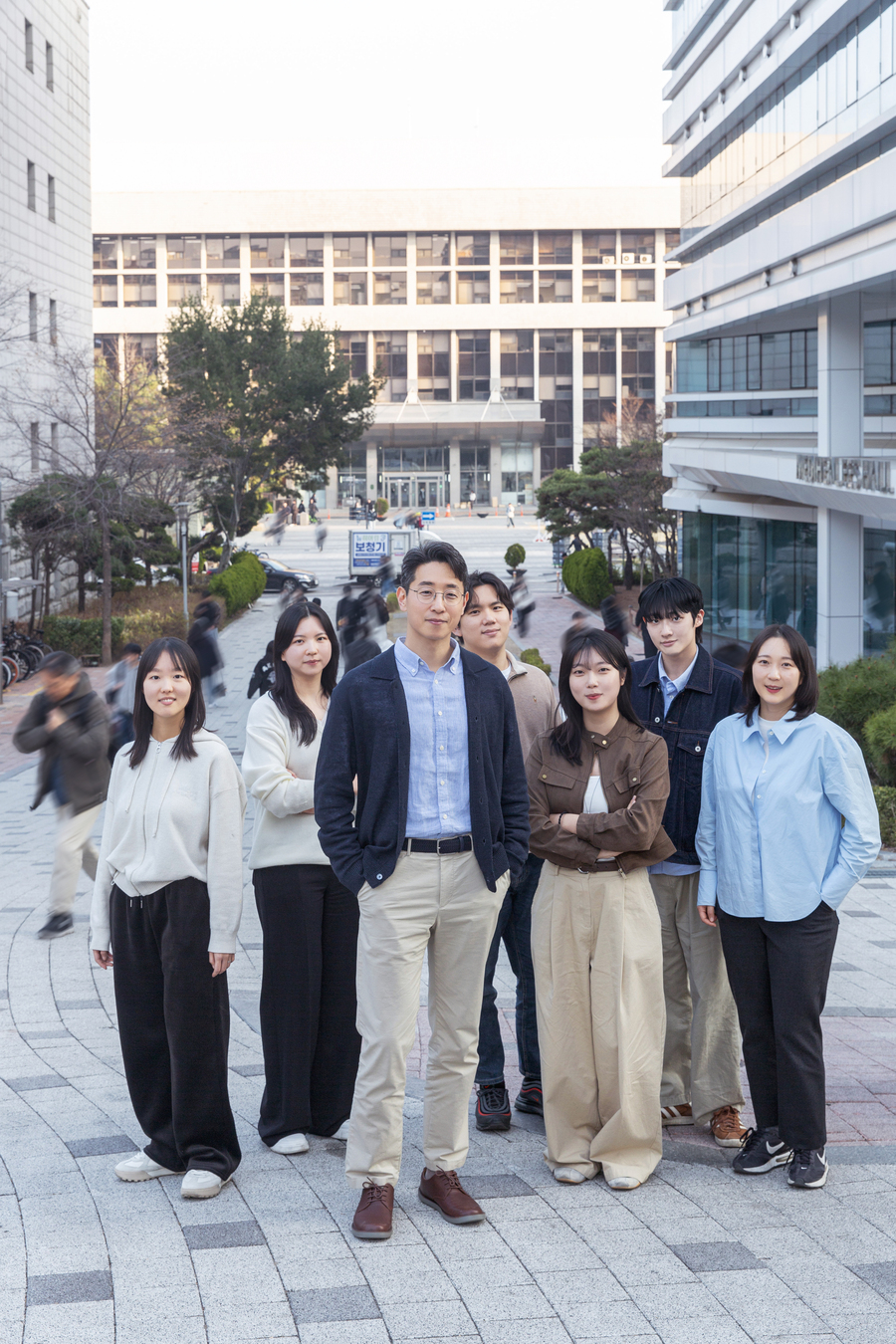
Despite being recognized among the world's top 2% of scientists, Professor Kim modestly insists that he still has a long way to go. What continues to excite him most is seeing new collaborative research published with colleagues at institutions such as Harvard University, the University of Wisconsin–Madison, and Stanford University, as well as with his students working alongside him in Anam.
When describing the members of his laboratory, Professor Kim uses the phrase "quiet passion." Because most members of the lab, including Professor Kim himself, have introverted personalities according to the Myers-Briggs Type Indicator (MBTI) framework, the laboratory is typically calm and peaceful, almost like a reading room. Yet beneath that quiet atmosphere lies an intense enthusiasm for scholarship. Whether working together on collaborative research, participating in journal clubs, or attending the Data Camp—a data analysis workshop held every academic break for all lab members—they engage in lively and intellectually stimulating discussions.
The laboratory has no fixed working hours, reflecting a philosophy Professor Kim inherited from his doctoral advisor. "My advisor believed that only those who can discipline themselves while enjoying unlimited freedom can truly succeed as researchers. I share that belief. It is only when people make that freedom genuinely their own that their full potential can emerge. When students send me their research plans, my role is not to manage them but to respect their autonomy. Through that process, they discover their own rhythm and gradually grow into independent scholars."
In many ways, the phrase "quiet passion" seems just as fitting for Professor Kim himself. As both a researcher seeking new knowledge and an educator devoted to nurturing the next generation of independent scholars, he continues to explore the intricate relationships among life, society, and health. His work on health inequality will undoubtedly continue to illuminate new challenges while offering meaningful paths toward their solutions.
Toward a More Equitable Future for Health,
Passionate Research by Compassionate Scholars
Professor Kim Jin Ho and the Health and Social Demography Lab
Park Han-sol (Postdoctoral Researcher) Song Eun-sol (Doctoral Candidate) Kwon Geun-young (Master’s Program, 4th Semester) Nam Na-kyung (Master’s Program, 2nd Semester) Kim Jin-ah (Division of Health Policy and Management, Incoming Class of 2022, Undergraduate Researcher) Lee Min-jae (School of Psychology, Incoming Class of 2020, Undergraduate Researcher)
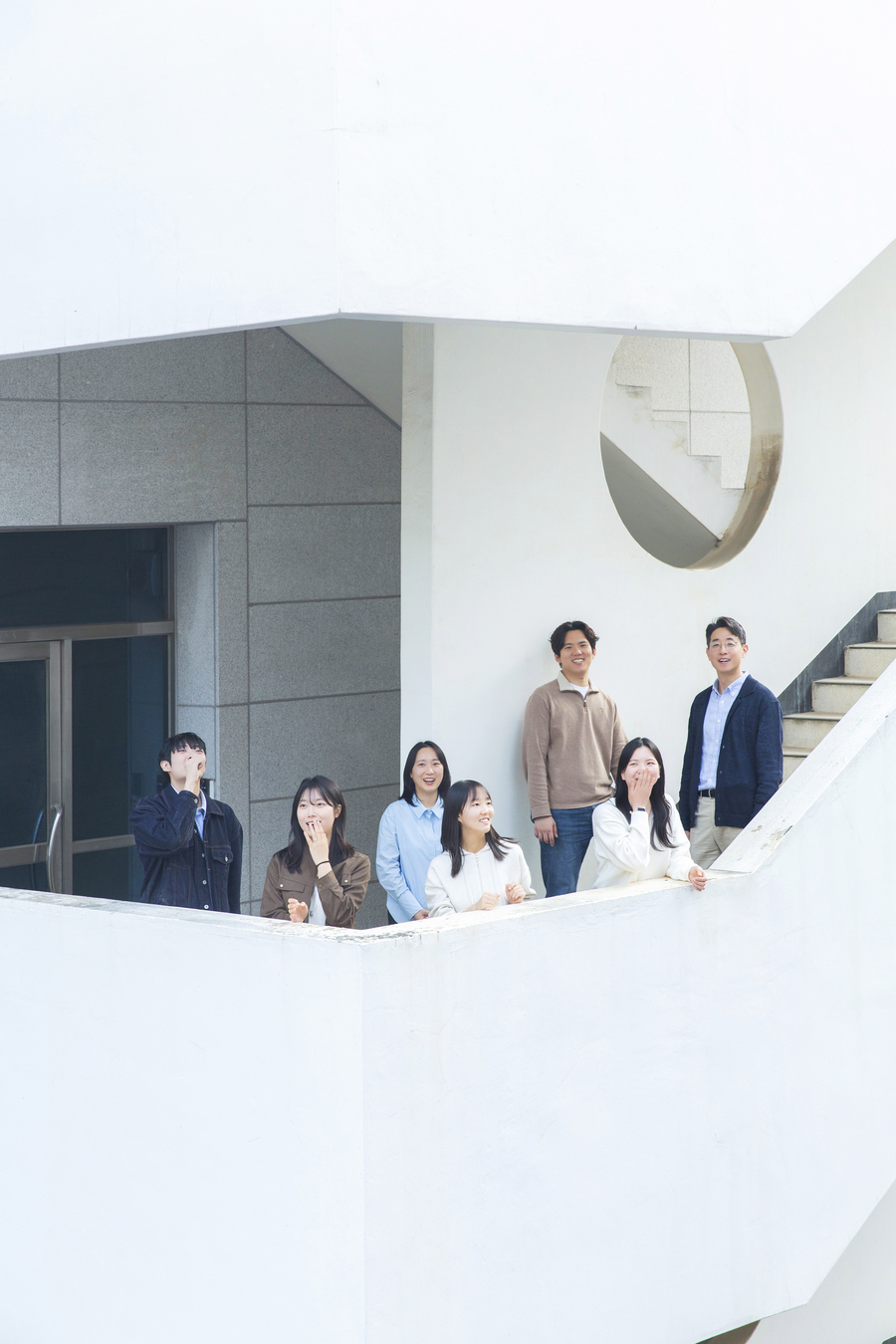
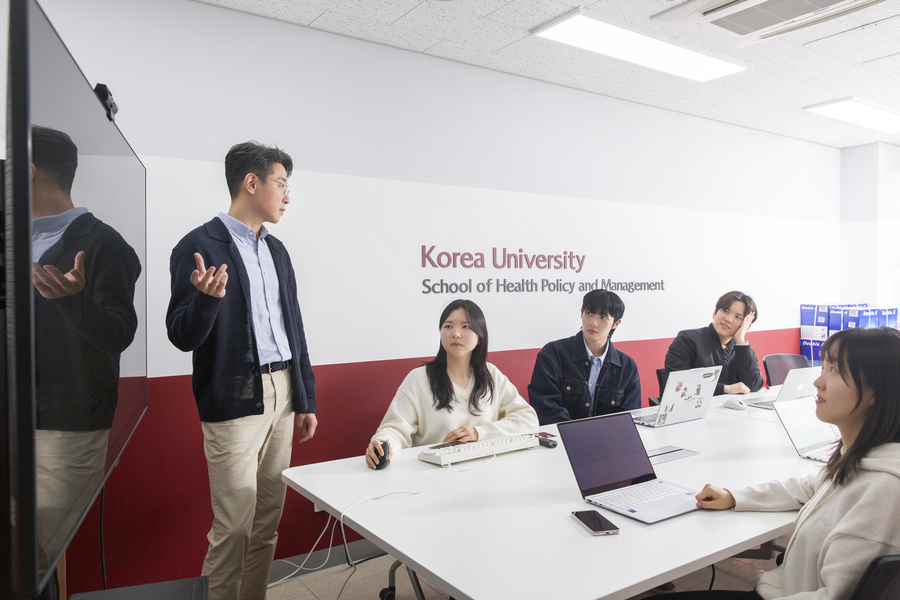
True to the nature of a dry lab,* the laboratory is filled not with experimental equipment but with computers, monitors, and stacks of papers. The calm, quiet atmosphere feels almost like a library. Yet the moment the researchers begin an animated discussion, the room seems to come alive with energy.
* Dry lab: In contrast to a wet lab, a dry lab conducts research through data analysis, computational modeling, and simulation rather than experiments involving physical materials.
Q. What does a typical day in the lab look like?
Geun-young: We have flexible working hours with no fixed schedule. Because we are a dry lab, we can conduct research anytime and anywhere. Personally, I concentrate best in the lab, so I come in often. More than anything, I enjoy the atmosphere and energy that emerge whenever everyone is working together in the same space.
Na-kyung: I am currently the newest graduate student in the lab. I often serve as a bridge between our alumni and the undergraduate research assistants. Before long, I will also be taking on a mentoring role, so I am preparing myself for that responsibility.
Jin-ah: As an undergraduate researcher, I am currently learning how research is conducted, including the structure of academic papers and research methodologies. My goal is to gradually develop the ability to understand research independently and build upon it.
Min-jae: I recently joined the lab. As I become familiar with the research environment, I have been assisting with literature reviews while developing my data analysis skills.
Q. Why did you choose this laboratory?
Eun-sol: I wanted to learn firsthand from Professor Kim's broad perspective on the life course and his sophisticated analytical methods.
Min-jae: As an undergraduate majoring in psychology and sociology, I became interested in the idea that mental health is shaped not only by individual psychological vulnerability but also by the social structures surrounding people's lives. Professor Kim is one of the leading scholars studying the psychosocial determinants of health and structural inequality across the life course, so I was confident this would be the ideal place to explore those questions in greater academic depth.
Jin-ah: I was fascinated by the lab's data-driven approach to analyzing public health policy and social issues related to health. I was especially impressed that Professor Kim's research addresses socially meaningful topics while employing rigorous methodologies and producing findings with clear policy implications.
Q. What has been your most memorable experience as a researcher?
Eun-sol: I entered the doctoral program later than most students, and after taking time away because of pregnancy and childbirth, I was able to return and submit a paper for publication. Balancing research with caring for my baby was not easy, but whenever I encountered difficulties, Professor Kim was always there to help. Looking back, I am proud that I kept moving forward without giving up, steadily developing my ideas and writing until the paper was successfully published.
Geun-young: Presenting my research at the Population Association of America Annual Meeting last year was unforgettable. The encouragement and genuine interest I received from fellow researchers gave me tremendous motivation to continue my work.

▲ Doctoral candidate Song Kyung-eun, Principal Researcher Jang Ha-yoon, and Postdoctoral Researcher Park Han-sol presenting at the 2022 American Public Health Association (APHA) Annual Meeting.
Q. What are you most proud of about your advisor?
Han-sol: I was the first doctoral graduate from our laboratory. (Laughs.) The greatest privilege has been being mentored by someone who truly serves as my role model as a researcher. Professor Kim is genuinely devoted to research, and thanks to his guidance, I have grown into a true researcher myself.
Eun-sol: He teaches us how to transform abstract research ideas into measurable variables and develop them into rigorous methodologies. He also carefully guides us in connecting analytical findings with theoretical frameworks to build persuasive arguments. Even when my questions are still unrefined, he quickly identifies the key issue and provides thoughtful feedback.
Na-kyung: Although Professor Kim has already achieved so much, he remains the first to embrace new research topics and analytical tools with genuine enthusiasm. Watching him reminds me that intellectual curiosity is one of the most important driving forces behind growth as a researcher.
Q. What are your personal goals as researchers?
Min-jae: I hope to become a researcher who empirically demonstrates how structural inequalities across the life course shape and reinforce mental health problems. By examining how social inequality affects individual health, I want to contribute to practical strategies that enable people to live healthier, more dignified lives within their communities.
Na-kyung: My research has focused on older adults and the relationship between work and health, but I hope to expand those interests to include unpaid labor, disability, and health. Rather than simply identifying problems, I want to become a researcher who uses rigorous analysis to ask meaningful questions and provide meaningful answers.
Q. What would you say to students interested in the Division of Health Policy and Management who are considering joining your lab?
Han-sol: Standing before the vast world of academia can feel overwhelming. It is not always easy to know what you truly enjoy or where to begin. If that sounds familiar, come to our lab. We are a place where we find the path together. We look forward to welcoming you into our community.
Eun-sol:: Here, you can pursue your own research interests in a supportive environment while growing as a scholar without losing sight of your personal life.
Geun-young: I would recommend our lab to anyone wondering how to broaden and deepen their studies within the social sciences. As an undergraduate, I spent a long time searching for my path in life. Now, I am convinced that research can contribute to building a healthier and more equitable society. Becoming an undergraduate research assistant is an excellent place to begin.
Jin-ah: What matters most is not arriving with perfect knowledge, but having a willingness to learn and the determination to keep improving. Our lab provides an environment where you can build a solid foundation step by step.